
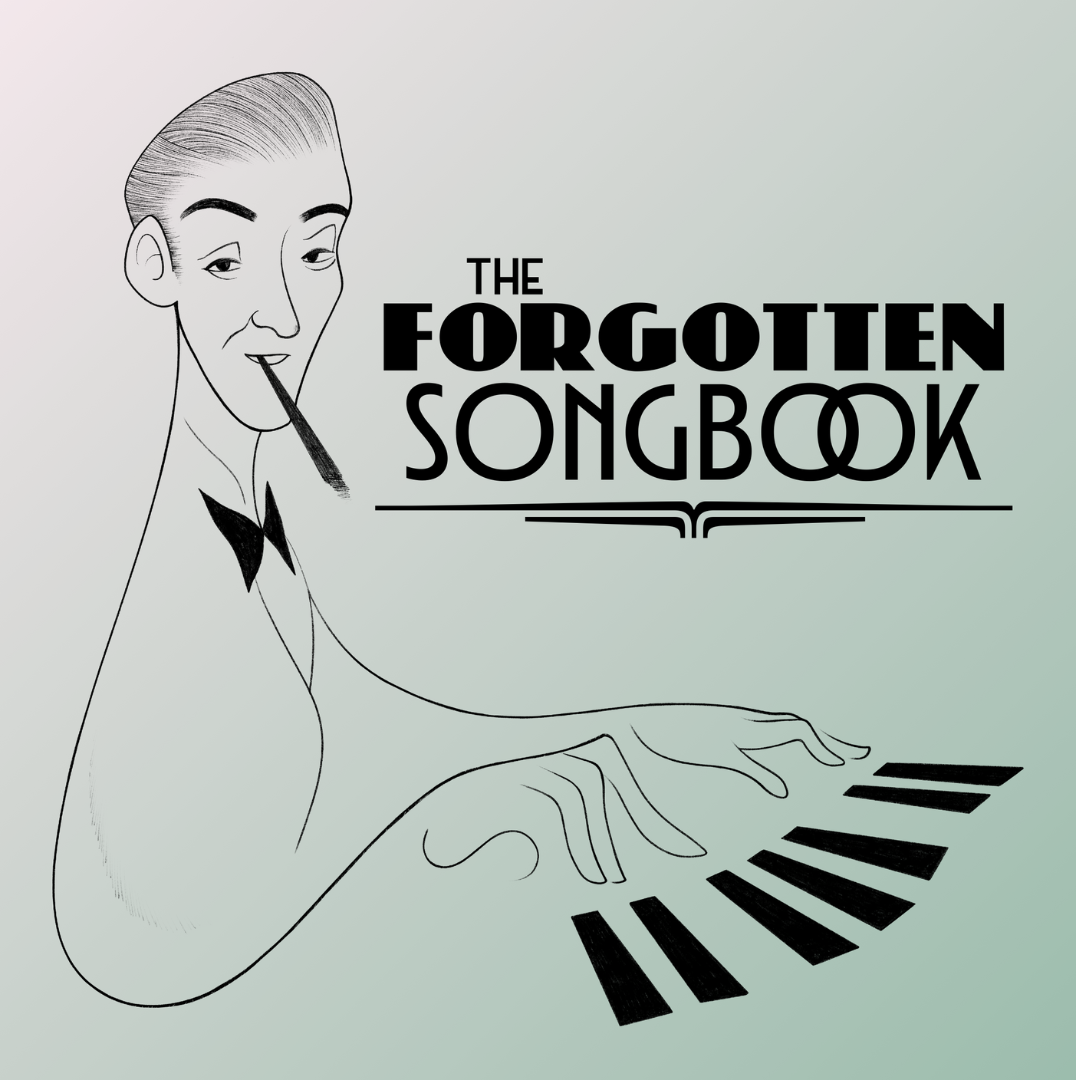
Wilbur Weissman was an American composer who could count the Gershwins, Cole Porter and even Richard Rogers as his contemporaries but unlike them, has faded into obscurity.

It was with great anticipation that I attended opening night of the The Forgotten Songbook with music that was saved from obscurity by musical director and composer Emerson Hurley. Accompanying a fabulous duo of performers on the piano, Hurley plays with sensitivity and nuanced comprehension that only an aficionado of this composer could apply. The two songs that he himself has composed and included in this show exemplifies what a great musical theatre flair Hurley possesses. I can’t wait to hear a full musical by this new voice.
Performers Karla Hillam and Jonathan Guthrie- Jones grasp these songs with flare and personality. Though the songs themselves are at times unforgettable, these performers certainly sell them with aplomb. Their comprehension of this style made the material more palatable. The chemistry between the two certainly added humour and colour.
The choreography by director Mikey Halcrow, was vaudevillian in style, very sophisticated and obviously tailored for Guthrie-Jones and Hillam’s amazing abilities. The two deliver it with such polish.
The set consisted of four hanging posters advertising the four major shows that Weissman composed. Designed by Yan Lin Tay, they help give the show a strong narrative by including songs from each production. Sound design by Ben Handley was well balanced between the baby grand piano and the performers.
The use of a medley would probably boost this show immensely – some songs are quite clunky and probably do not need to be heard in full, especially with all the dance breaks. The highlight of the show was the act one finale House of Un-American Activities Rag composed by Hurley. It was an inside glimpse into the anti communist hearings in the fifties that Weissman was subjected to and had echos of Kander and Ebb.
The heart of this new production lies in Dylan McBurney and Emerson Hurley’s engaging book, which in Act One is succinct and filled with wonderful insights that bring Wilbur Weisman vividly to life. In Act Two, the focus shifts more toward the performers’ personal lives and relationships, which—while beautifully acted—draws us away from the rediscovery of the forgotten composer we had been so eager to explore. A future staging might consider shaping this as a one-act piece, keeping the spotlight firmly on Weisman and his remarkable body of work.