Theatre, Fear, and the Future of Feeling: Why Live Performance Still Matters
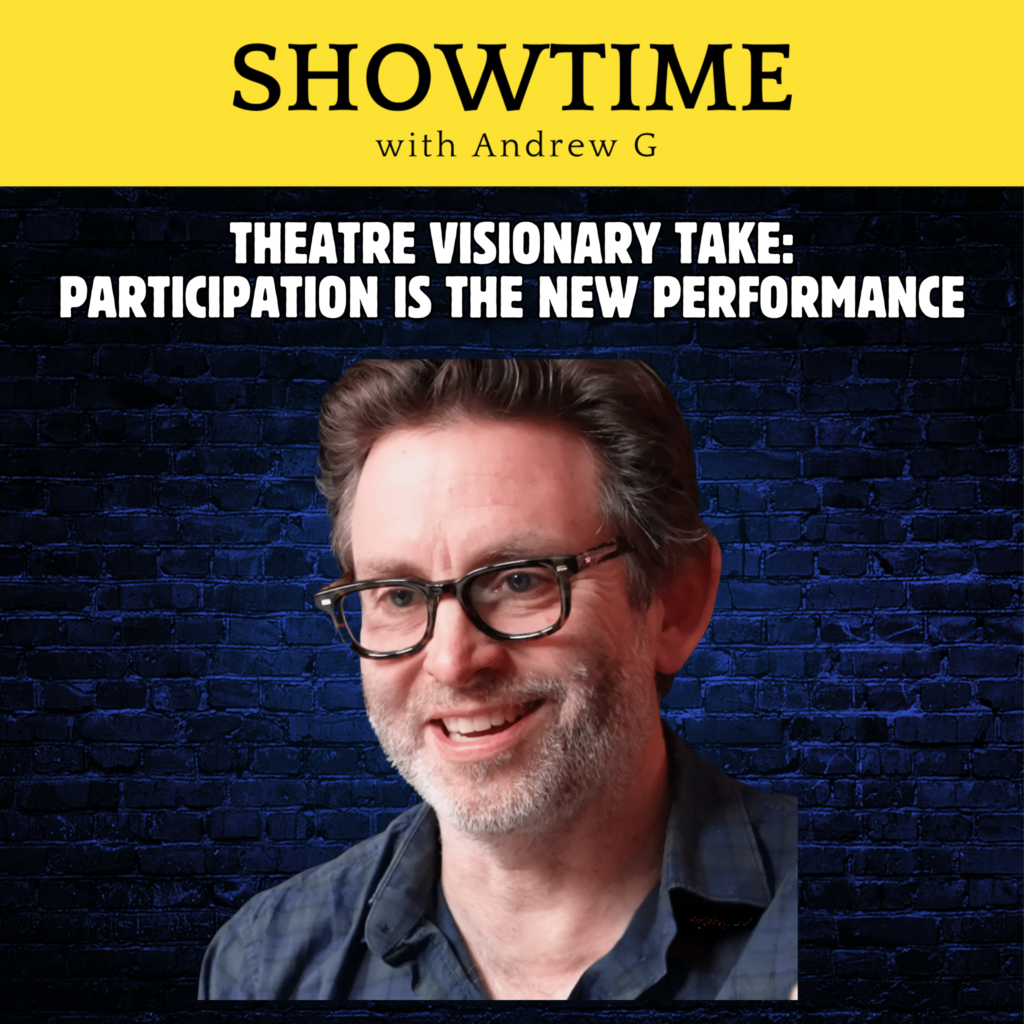
Every so often, a conversation about theatre moves beyond stages and spotlights and becomes something far more human. In this episode of Showtime, Andrew G sits down with acclaimed arts leader and director Sam Strong — a creative force who has transformed major companies and is now leading a bold new chapter at Gasworks Arts Park.
What unfolds isn’t just an industry discussion. It’s an honest reflection on risk, accessibility, failure, participation, and the quiet power of a room full of strangers feeling something together.
This isn’t just a story about theatre.
It’s about why we still gather.
The Moment That Changes a Room
Sam describes those rare, almost indescribable experiences in live performance — the one-in-a-thousand nights where something shifts. The air changes. The audience leans in. The work bypasses logic and lands somewhere deeper.
It’s why he started making theatre in the first place.
Because when it works, it doesn’t just entertain.
It transforms.
But what’s striking is how his motivation has evolved. It’s no longer just about creating powerful experiences for audiences. It’s about creating opportunities with them — expanding who gets to participate, who gets to create, who gets to see themselves reflected not only on stage, but in the act of making.
The future, he suggests, isn’t passive.
It’s participatory.
Is Theatre Really Inaccessible?
The question lingers: why do so many people feel theatre “isn’t for them”?
Sam doesn’t blame the audience. He turns the mirror back on the industry.
Sometimes, he admits, theatre talks like an insider’s club. The language becomes too clever. The tone becomes exclusive. The messaging assumes knowledge instead of inviting curiosity.
Accessibility, he argues, isn’t about simplifying art. It’s about communicating it clearly. It’s about respecting the audience enough to speak plainly, energetically, and authentically.
It’s not about lowering standards.
It’s about lowering barriers.
The Courage to Back Risk
Leadership in the arts isn’t just creative — it’s public.
Sam speaks candidly about programming work that challenges, divides, even unsettles. Not because controversy is fashionable, but because some stories are necessary. Some voices need space. Some work reshapes the cultural landscape.
That kind of decision-making requires conviction.
It also requires an acceptance of failure.
In creative spaces, failure isn’t a flaw — it’s fuel. Sam describes his job in rehearsal rooms as managing fear. If artists are too afraid to try, nothing extraordinary will happen. The same applies at an organisational level.
Fear stifles.
Trust liberates.
And sometimes the boldest leadership choice is simply allowing people to experiment without punishment.
The Collective Experience We Can’t Stream
In a world saturated with streaming platforms and on-demand content, live performance might seem fragile. But Sam sees its strength precisely in what technology can’t replicate.
You can watch a brilliant story alone on your couch.
But you cannot recreate the sensation of 600 people breathing in sync. Laughing together. Falling silent together. Rising to their feet together.
That shared, collective moment — unpredictable and alive — is theatre’s superpower.
It’s not just the story unfolding on stage.
It’s the story unfolding in the room.
And every audience shapes the performance differently. The energy loops between stage and seats in a way no algorithm can imitate.
A Home for Creativity
Now leading Gasworks Arts Park in its 40th year, Sam’s vision is expansive: a true “home for creativity.” Not just a venue, but a place with multiple entry points — galleries, theatres, studios, parkland — where professional artists and first-time creators coexist.
The shift is subtle but significant.
Not art as spectacle.
Art as invitation.
Free public events. Participatory workshops. Open studios. Spaces where someone might wander in for a coffee and discover something unexpected.
Creativity, democratised.
What We’re Really Looking For
Strip away the industry language and what remains is simple.
People come to theatre to feel something.
Laughter. Discomfort. Recognition. Joy. Grief. Release.
We don’t gather in dark rooms because we have to. We gather because, somewhere deep down, we crave connection — to story, to each other, to ourselves.
And perhaps that’s why theatre persists, despite predictions of its demise for thousands of years. It adapts. It evolves. It experiments with digital forms and participatory models. But its heartbeat remains the same.
A room.
A story.
A shared breath.
In a disconnected world, that isn’t indulgent.
It’s essential.